Monthly function testing, annual full-duration testing, repairs, upgrades and new installation — with logbooks maintained and out-of-hours scheduling so your premises is never left without cover.
Emergency lighting is one of those systems that is easy to forget precisely because it does nothing until the moment it matters. It sits there for years drawing a trickle charge, and the batteries quietly degrade — and nobody finds out until either a test is carried out or the power actually fails.
DTF Electrical handle emergency lighting across Liverpool, Kirkby and Merseyside for commercial premises, managed residential blocks and licensed properties. Testing, repairs, upgrades, new installation and routine maintenance.
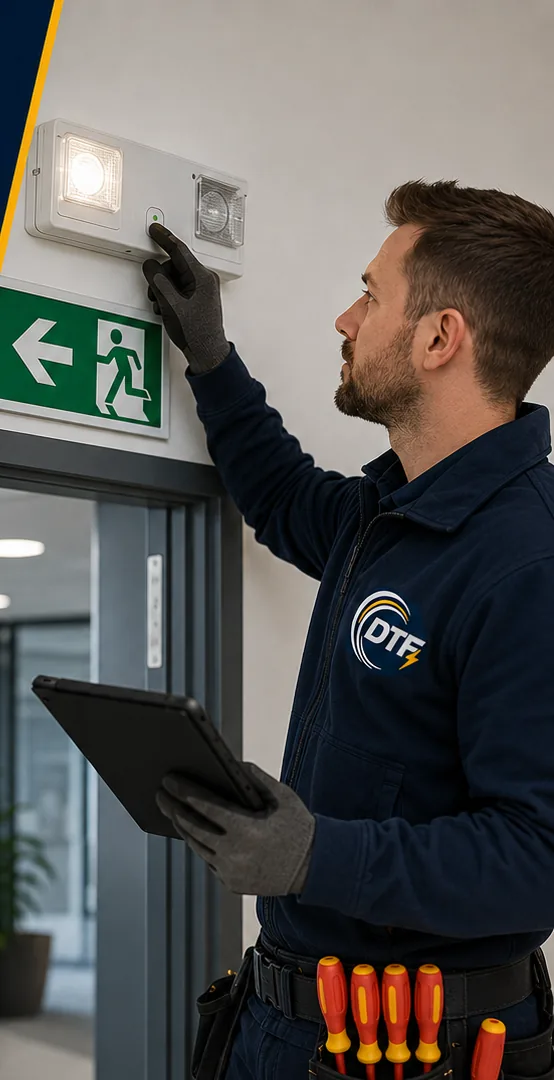
Each luminaire is briefly switched to its battery supply to confirm it illuminates and that the charging indicator is working.
The full-duration test — normally three hours — establishes whether batteries genuinely sustain output for the rated period rather than simply flickering into life for a few seconds.
After a three-hour drain the batteries need time to recharge, during which the building has reduced emergency lighting cover. We schedule duration tests overnight or at weekends.
Testing that is not recorded is, for compliance purposes, testing that did not happen. We maintain your emergency lighting logbook as part of the service — every test dated, every result recorded, every failure and remedial action documented.
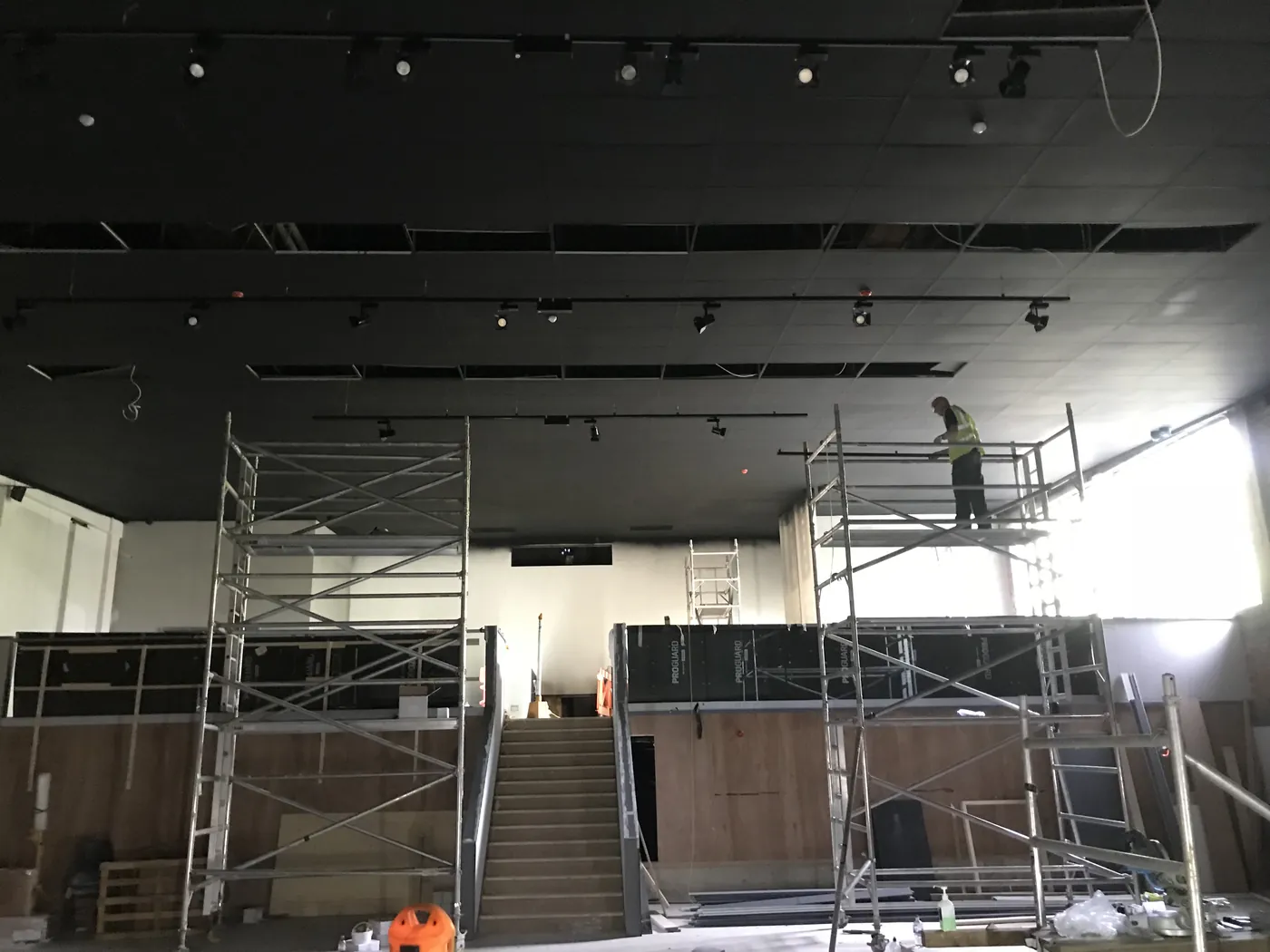
Emergency lighting is designed around escape routes. If your premises has been altered since the system went in, it is worth having the coverage reassessed rather than assuming the existing fittings still do the job.
An electrical maintenance contract puts your emergency lighting cycle on a managed calendar alongside fixed wire testing and PAT, so nothing gets missed.
Common Questions
The standard regime is a monthly function test and an annual full-duration test. The monthly test confirms each luminaire illuminates when the supply is interrupted. The annual test runs the system for its full rated duration — usually three hours.
A duration test simulates a real mains failure for the full rated period of the system, typically three hours. It is the only way to establish whether batteries genuinely hold their charge.
The duty falls on the responsible person for the premises — typically the employer, building owner, landlord or managing agent. Using a contractor to carry out the work does not transfer the duty, but it does mean it gets done properly and documented.
A logbook recording every function and duration test, the date, the result, any failures found and what was done about them. We maintain the logbook as part of the service.
Yes, and for duration testing we would usually recommend it, since running a system flat for three hours leaves the building without full cover while the batteries recharge.